
Highlight
pge-corp

- Covers the period from 2022 to 2030.
Our approach
Today, about one in eight of all EVs in the U.S. can be found in PG&E’s service area. In early 2025, California hit a significant milestone of deploying over 170,000 chargers, including about 16,000 fast chargers, which gets us closer to California’s goal of 250,000 chargers. But there is still more to do.
Unleashing the full potential of electric vehicles
To meet both the state’s goals and our own, we are actively engaged in projects to expand EV charging infrastructure, provide EV education and outreach, prepare our grid for electrification, and continue to integrate EV charging.
This includes collaborating with automakers, charging equipment providers, and state programs to build and support the large-scale electric infrastructure needed to incorporate EV charging systems into the electric grid. PG&E also supports EV adoption through rates, rebates, tools, and outreach to help reduce the total cost of ownership of an EV and increase awareness about the benefits of EVs.
EV Infrastructure Rule 29 is designed to make it simpler and less costly for commercial, industrial, or multi-family customers to install EV charging infrastructure. Under Rule 29, PG&E will pay for and coordinate the design and deployment of service extensions from PG&E’s electrical distribution line facilities to the service delivery point for separately metered EV charging stations.
2024 milestones
Customer programs and pilots
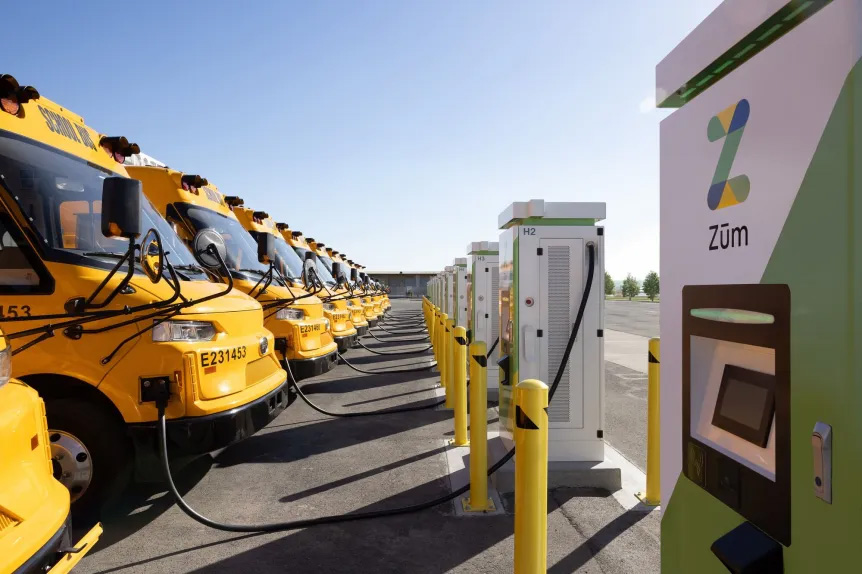
In 2024, with our EV Fleet program, we completed construction of 43 sites to enable innovative medium- and heavy-duty transportation electrification initiatives. With our EV Fast Charge Program, we completed 11 sites across different customer locations, including convenience stores, retail centers, and public parks.
- As of December 31, 2024, the Empower EV program closed its application window to new customers. The program will focus on serving all remaining customers as we sunset the program in 2025.
We launched a new program, EV Fleet Advisory Services, that offers one-on-one help for medium- and heavy-duty fleets to switch to EVs. The program is designed to support fleets that are just getting started or already have EVs in operation, with resources to help with each step in the electrification process. From customers looking to confirm grid capacity to those needing help selecting charging equipment, our advisors are there to help.
Low carbon fuel standard (LCFS) programs
PG&E participates in California’s LCFS program, which aims to lower the carbon impact of the state’s transportation fuels by 30% by 2030 and 90% by 2040. PG&E earns credits for supplying the low-carbon fuels of electricity and CNG for vehicles and uses the revenue from the sale of LCFS credits to fund customer programs.
Innovation, R&D, and vehicle-to-grid integration
- Launched Phase 2 of our vehicle-to-everything (V2X) pilot programs involving residential and commercial customers in multi-customer microgrids and single-customer microgrids, which support critical infrastructure. The pilots focus on enabling large-scale customer adoption of bidirectional charging technology by providing financial incentives to customers, with added benefits to those located in disadvantaged communities. We will evaluate the ability for systems to provide emergency backup power and the cost-effectiveness—for both customers and the utility—of bidirectional charging technology to support the grid through the use of hourly flex pricing, a day-ahead hourly rate.
Highlight
PG&E is taking part in innovative bidirectional and EV charging technology partnerships to reimagine the use of EVs as backup power sources for customers and connect EV charging stations faster. We are exploring:
- Process innovation with Tesla to connect Superchargers faster and more efficiently, and testing Cybertruck V2X deployments.
- How Ford’s F-150 Lightning electric truck can provide resiliency benefits to PG&E’s customers.
- How to use certain GM EVs as on-demand power sources for residential homes.
Expanding rate options
- Enabled low-cost fueling for commercial customers through Business EV (BEV) rate with over 985 sites enrolled through 2024, including workplaces, fleets, and public fast charging sites. This rate is designed to reduce EV charging costs through a monthly subscription charge, giving customers more control over costs.
- Implemented EV submetering, which allows customers to separate EV charging consumption from home or business usage. This gives customers flexibility to select the best rate for their EV charging.
- Launched hourly flex pricing pilot rates for EV customers, offering way to lower energy costs while promoting cleaner energy and more reliable grid. These rates are set one day in advance and, for most of the year, are the same or lower than comparable rate plans. Participation is risk-free, as customers are billed based on their current rate plan and receive a credit for the difference between what they paid and what they would pay on hourly flex pricing.
Measuring progress
The number of EVs in operation in PG&E’s service area reached over 712,000 in 2024, showing a consistent growth in registrations. PG&E estimates that nearly 30% of new vehicles sold in 2024 in PG&E’s service area were electric.
EVs in PG&E’s service area
Residential EV rate enrollment in PG&E’s service area
Non-residential EV rate enrollment in PG&E’s service area
- Source: Electric Power Research Institute, based on external registration data and represents vehicles in operation.
- Includes enrollments in all residential electric vehicle rate plans (EV-A, EV2-A, and EV-B).
- Includes enrollments in non-residential electric vehicle rate plans (BEV-1 and BEV-2) for active sites.
We also maintain a network of 28 CNG vehicle refueling facilities. PG&E uses our expertise to help commercial customers take advantage of this relatively low-emitting domestic alternative fuel in their own fleets.
Highlight
We’re helping residential and commercial customers explore the financial benefits of owning an EV:
- Our EV Savings Calculator enables prospective and current EV drivers to explore available light-duty models, learn about incentives to reduce the cost of the vehicles, determine the best residential rate plan, and locate charging stations. In 2024, the calculator surpassed 1.5 million unique visitors since its launch in 2019.
- Our EV Fleet Calculator helps customers looking to electrify their fleets. The customizable tool includes incentives and grants available through PG&E and other local, state, and federal programs; how to save through the BEV rate; and a LCFS credit calculator.