

©2026 Pacific Gas and Electric Company
pge-corp

Wildfire safety
Gas safety
Climate resilience
Our approach
We work to safely transport natural gas through approximately 50,000 miles of natural gas pipelines. The system includes about 6,400 miles of transmission pipelines, approximately 44,000 miles of gas distribution pipelines, three gas storage facilities, and nine compressor stations which receive and move natural gas through our pipeline network.
While we have made strides in key safety areas, we realize there is more to do to demonstrate our commitment and progress toward gas safety excellence. Our focus remains on maintaining and operating this system safely and reliably, with public and workforce safety as the single most important driver of our work.
2023 milestones
Gas transmission system
PG&E continues to invest in the safety and reliability of our gas transmission pipeline system. From 2011 to 2023, we achieved the following results:
- Validated safe operating pressure by strength-testing 1,614 miles of gas pipeline
- Replaced 285 miles of gas transmission pipeline
- Automated 405 valves, enabling automatic or remote-control shutoff of gas in an emergency
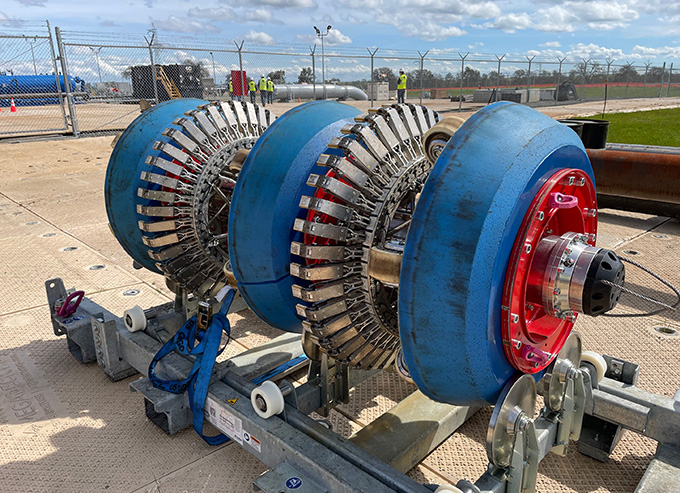
- Retrofitted 2,237 miles of gas transmission lines to accommodate in-line inspection tools, or “smart pigs,” which are used to inspect the condition of pipelines using sophisticated technology
We also conduct surveys of our gas transmission system by air to prevent safety risks or unknown excavations occurring on or around our pipeline.
Gas distribution system
We continue to improve the safety and reliability of PG&E’s gas distribution system through enhancements to leak response and repair, the deployment of new tools and technologies, and our records and information management.
PG&E uses a diverse array of state-of-the-art tools to survey and inspect our gas infrastructure by air, land, and water. Crews use handheld devices; aircraft equipped with LiDAR technology; and leak-detecting vehicles, boats, drones, and all-terrain-vehicles to help identify leaks and make repairs when needed. Since 2014, PG&E’s Picarro gas leak survey vehicles have enabled us to quickly identify leaks and prioritize them for repair.
Other highlights from 2023 include:
- Fixing open minor non-hazardous workable leaks within 113 days on average, exceeding our target performance of 150 days
- Responding to gas odor reports within 20 minutes on average
- Replacing 1,498 total miles of gas distribution main since 2011
Measuring progress
PG&E has measured our progress in enhancing the safety of our gas system since 2010 and remains committed to continuous improvement.
1. In 2014, all known remaining cast iron pipe was decommissioned.
- Includes interdepartmental natural gas sales for the purpose of electric generation but excludes other interdepartmental natural gas sales.