Sustainability Highlight
pge-corp

Wildfire safety
Gas safety
Climate resilience
PG&E must be resilient to the physical risks of climate change, which have the potential to threaten the safety and reliability of the energy system, as well as the safety of our customers.
Our approach
Adapting to these changing risks involves understanding the impacts of climate change on our business, coworkers, customers, and the communities we serve. It also means being prepared to withstand and rapidly recover from major disruptions in service caused by climate-driven weather events. PG&E’s commitment is to continue to provide safe, reliable, affordable, and clean energy service even as the climate conditions under which we operate become more challenging.
Our commitment to climate resilience is embedded in our cross-functional approach, which engages leadership from key departments across the business in a structured manner. Through PG&E’s Lean operating system, climate resilience priorities can be raised daily, weekly, and monthly at cross-departmental operating review meetings. More broadly, climate change is a cross-cutting risk factor across our strategic planning process and enterprise risk modeling efforts.
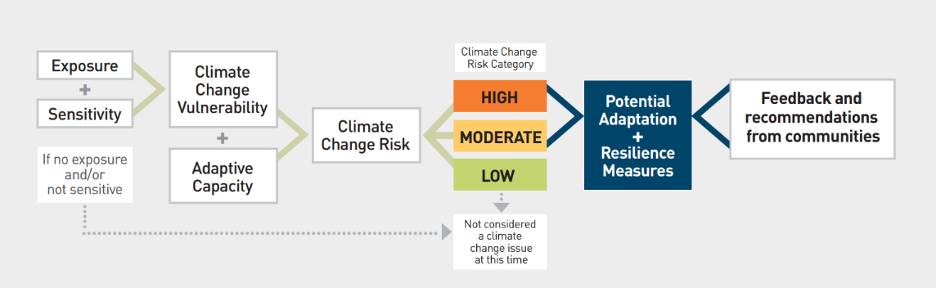
PG&E’s Climate Adaptation and Vulnerability Assessment provides the foundation for prioritized adaptive action to the growing impacts of a changing climate. PG&E’s framework assessed climate change vulnerabilities and identified climate change risks while integrating feedback from communities into potential adaptation and resilience measures.
To inform our assessment, PG&E partnered with trusted community members to design and implement outreach to designated disadvantaged and vulnerable communities in effective, respectful, and culturally appropriate ways. The outreach effort included:
- Convening five regional advisory groups, composed of 60 community-based organizations in disadvantaged and vulnerable communities.
- Conducting over 40 research interviews with community leaders.
- Collecting over 6,000 survey responses about impacts of climate hazards and energy outages.
- Developing culturally relevant materials translated into 10 different languages.
Key findings
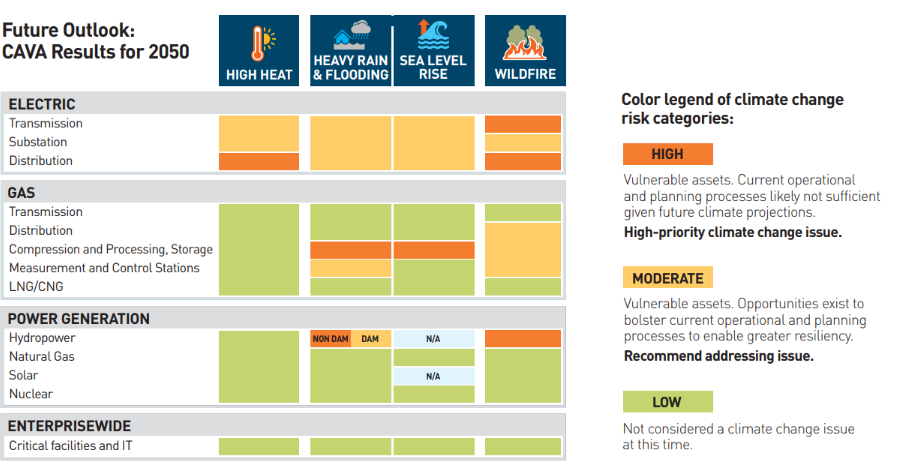
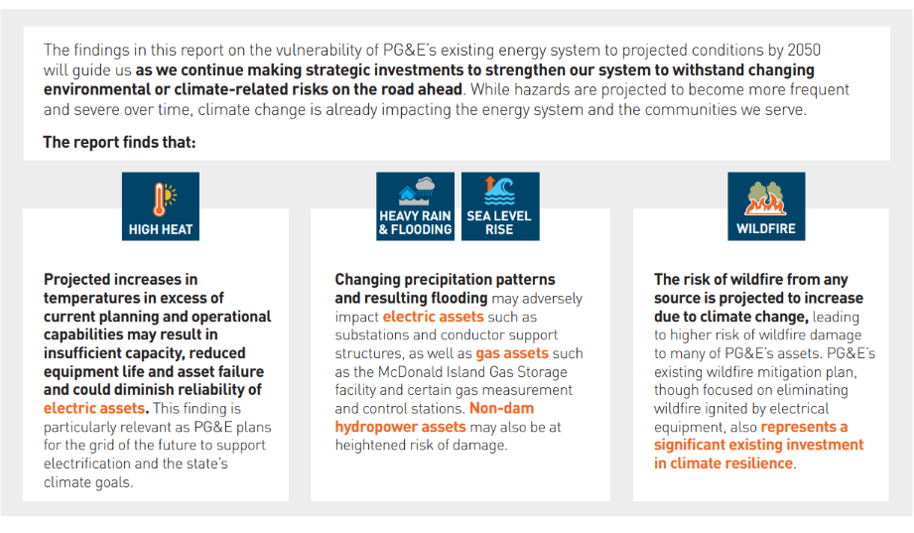
Changes in environmental conditions and extreme weather are projected to continue creating a more challenging environment in which PG&E operates—presenting direct and indirect risks to PG&E’s assets and operations, as shown in the chart.
Championing climate resilience across the energy utility industry
We are supporting the development of industry-wide best practices for integrating climate science, developing climate vulnerability assessments, and adaptation strategies as a technical advisor for Climate READi, an Electric Power Research Institute initiative.
Additionally, in 2023, we presented at the California Adaptation Forum to share best practices and key learnings from our assessment, including community engagement. We also shared best practices in climate resilience planning through our partnership in the SAFER Bay project, which when completed will protect one of our substations from the impacts of sea level rise.
Helping to build local climate resilience
PG&E added our first 100% renewable remote grid at Pepperwood Preserve in Sonoma County, our fifth operational remote grid since 2021. Collectively, PG&E’s remote grids enable 10 customers to continue receiving safe, reliable, affordable, and low-carbon energy, while removing about five miles of overhead distribution electric lines at the grid edge in high fire-threat areas.
PG&E has identified other locations where remote grids may be the most effective way of reducing wildfire risk and improving electric reliability, with potential sites in Madera, Shasta, and Tehama counties.
Pacific Gas and Electric Company offers the Resilience Hubs grant program, which helps communities build a network of local hubs to build community resilience to climate-driven extreme weather events.
In 2023, PG&E awarded four Feasibility Project grants of $25,000 each, to fund an assessment of resilience hub needs and conceptual ideas for a resilience hub:
- African American Network of Kern County
- California State Parks Foundation
- City of Oakland
- Willow Creek Youth Partnership DBA Dream Quest
PG&E awarded three Design and Build Project grants of $100,000 each, toward the design or creation of a resilience hub, either planning and design of new physical spaces or mobile resources or retrofits of existing buildings or structures to support community resilience: