Sustainability Highlight
pge-corp

At PG&E, we are dedicated to serving people, the planet, and California’s prosperity by building and maintaining charitable partnerships with non-profit organizations, local and tribal governments, and other community groups.
Our programs support resiliency to the impacts of climate change, while also helping to ensure our customers and coworkers are safe and have opportunities to grow and thrive in their communities. Our charitable programs are funded entirely by our shareholders and have no impact on our customers’ energy rates.
Our approach
The Better Together Giving Program provides grants each year to 501(c)(3) non-profit organizations, schools, and local and tribal governments across Northern and Central California. This support can come from PG&E or The PG&E Corporation Foundation.
Community investments focus on supporting disadvantaged communities, such as low-income individuals, communities of color, people without housing, women and girls, veterans, senior citizens, people with disabilities, and members of the lesbian, gay, bisexual, transgender, intersex, asexual, and queer (LGBTQ+) communities.
2023 milestones
Project 212, a FIRST robotics team from Ygnacio Valley High School in Concord, faces more challenges than most, but competes against the best teams in the world. Watch a PG&E-produced short film which chronicles their journey.
People
We supported Northern and Central California communities in preparing for potential disasters and responded quickly with aid when disasters occurred:
- Community Relief. PG&E and The PG&E Corporation Foundation continued their annual support for the American Red Cross with $850,000 in total contributions to support their disaster response and emergency preparedness activities at the local and regional levels.
- Wildfire Preparedness. PG&E partnered with the California Fire Foundation and local fire departments to promote emergency preparedness and safety. The $730,000 in grant funding distributed by the California Fire Foundation supported 48 fire departments, fire agencies, and community groups in high wildfire threat areas to help implement safety programs.
- Partnerships with Local Non-Profits. PG&E and California Fire Foundation co-branded disaster preparedness and fire safety messaging was disseminated to 43 non-profit CBOs in high wildfire threat areas. Several organizations shared the safety content to more than 400,000 residents through community partners and social media. Fire safety messaging was seen more than 44 million times by residents in high fire threat areas.
- Public Safety Demonstration Program. PG&E advanced emergency preparedness, planning, and education by presenting at more than 100 events, including the California State Fair and local fairs and events. In total, preparedness information was shared with more than 750,000 community members.
We collaborated with partners to support local leaders and help offer the resources and tools they need to succeed in life:
- Elevating Diverse Leaders. PG&E and The PG&E Corporation Foundation donated more than $400,000 to organizations such as Hispanas Organized for Political Equality (HOPE), California Women Lead, California African American Action Fund, and the California Asian Pacific Chamber of Commerce, among others. This continued our longstanding support for local, regional, and statewide diverse chambers of commerce and minority supplier programs enhancing equity and opportunities for women, people of color, native peoples, LGBTQ+, and veteran Californians.
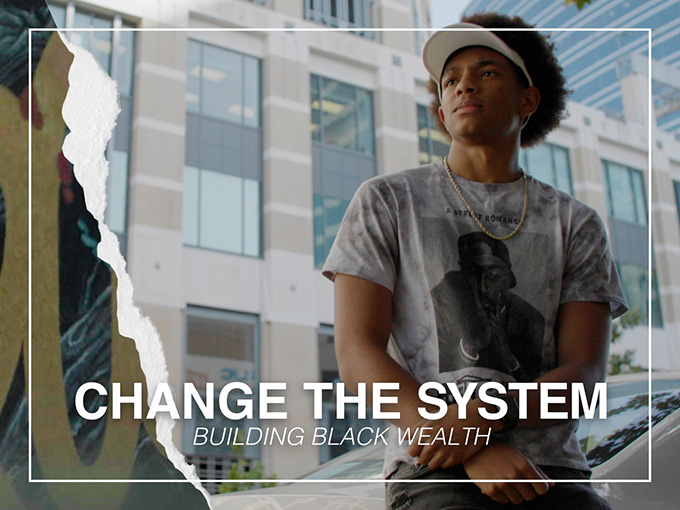
- Racial Equity Program: PG&E continued its advanced financial education program for African American high school students in Oakland to help address the racial wealth gap disproportionately impacting this community. In collaboration with the Northeastern University at Mills College Trio Programs, the first cohort of high-achieving students (participating in a two-semester course at the Haas Business School at the University of California at Berkeley) completed the program in June, with the second cohort beginning in September. Each student receives $8,000 in college scholarships upon successful graduation from the program.
We worked closely with community partners to help address the growing food insecurity problem so many of our communities continue to experience:
- Community Resiliency Fund. PG&E provided $775,000 to support the social safety net in California, including 48 county and tribal food banks and other non-profits, with an emphasis on those serving communities in Tier 2 and 3 high fire-threat districts. This program ensured 3.87 million meals went to those experiencing food insecurity.
Planet
PG&E and The PG&E Corporation Foundation fund programs promoting environmental stewardship across our service area:
- Better Together Nature Positive Innovation Grant Program awarded five $100,000 grants, one in each region of PG&E’s service area. The projects are designed to protect and restore land, water, and air in habitats and communities. The grantees are Middletown Rancheria of Pomo Indians, Maidu Summit Consortium, Marine Science Institute, Farm Discovery at Live Earth, and Little Manila Rising.
- Investing in Parks. PG&E and The PG&E Corporation Foundation collaborated to foster climate resilience, park stewardship, and decrease barriers to access—investing over $400,000 in partnerships with the California State Parks Foundation, Parks California, Nature Bridge, and Trust for Public Land. Together, these programs provided field trips and overnight excursions for Title 1 school students to California’s national and state parks; in-person workdays to protect and improve state parks; and quality walkable neighborhood green spaces.
- Building the Next Generation of Environmental Leaders. Enabling high school students and recent college graduates to engage in the areas of forest and fire resilience, regenerative agriculture, land conservation, and climate resilience allows participants to deepen their knowledge and become advocates for change. PG&E was a founding funder of UC Berkeley’s GrizzlyCorps program, which annually places over 30 college graduates in nonprofit, tribal, Resource Conservation Districts, and UC Research Stations to expand their capacity, while helping foster a new generation of committed leaders to these fields.
Prosperity
PG&E and The PG&E Corporation Foundation support STEM initiatives; job creation and workforce development; and support for local businesses:
- Better Together Investing in California Youth. PG&E and The PG&E Corporation Foundation awarded grants of over $750,000 to organizations including Oakland Promise, Stockton Scholars, The Fresno Foundation at FCOE, 10,000 Degrees, Northern California College Promise Coalition, The Hancock Promise, The Cuesta College Foundation for Promise Initiative, and the Los Rios Equity and Access to Education Program.
- Better Together STEM Scholarships. PG&E awarded scholarships to 60 students studying engineering, computer science and information systems, cybersecurity, and environmental sciences. Since 2012, this program has awarded more than $6.5 million to youth seeking higher education in the STEM majors.
- FIRST in California. The PG&E Corporation Foundation matched a $100,000 donation from the PG&E Corporation CEO’s family foundation, Dream Maker Fund, for a total grant of $200,000 to support robotics programs and mentorship in PG&E’s service area. FIRST engages over 16,000 California students annually in STEM programs.
- Supporting Small Businesses in our Communities. Through a partnership with the California Restaurant Foundation (CRF), $900,000 in funding supported small, diversely-owned businesses. Through the three-year partnership, grants funded by PG&E and The Foundation have contributed $2.3 million to support 521 small business restaurants in all five PG&E regions. Restaurants that received funding were 69% female-owned and 76% owned by people of color. The From Kitchen to Community short film series chronicles the journey of several restaurant grantees.
Coworker engagement
Through multiple programs, PG&E’s coworkers engage and support their communities on a local level:
- PG&E’s Community Service Incentive Program provides coworkers and retirees who volunteer more than 25 personal service hours with a Community Service Award and grant of $350 on their behalf to a qualifying non-profit organization of their choice. In 2023, about 290 employees logged enough hours to earn an award.
- PG&E’s Employee Resource Groups (ERGs)—representing different aspects of PG&E’s diverse workforce—provide opportunities for engagement among community groups and activities that reflect their interests and priorities, including their own charitable contributions and scholarship programs.
- Through The PG&E Corporation Foundation’s Matching Gifts Program, eligible gifts from PG&E coworkers and retirees are matched, dollar-for-dollar, up to $1,000 per calendar year per individual. In 2023, the program matched nearly $3 million in individual contributions to nearly 5,000 CBOs and schools.
- Coworkers also raised nearly $700,000 through donations and matches from The PG&E Corporation Foundation through fundraisers for non-profits and schools through our Peer-to-Peer Fundraisers program.
Measuring progress
In 2023, PG&E and The PG&E Corporation Foundation made 1,031 charitable contributions to CBOs with an aggregate total of $22.6 million in charitable contributions. Coupled with the $3 million in contributions from the employee Matching Gifts Program, aggregate charitable support for communities totaled $25.6 million in 2023.
Review our 2023 Community Relations Impact Report and Infographic (PDF) recording the results of our charitable programs and community engagement efforts for the year.
2023 support for disadvantaged communities*
*The above communities are not mutually exclusive and are self-reported by the recipient organizations.