
Hydroelectric Energy
On this page:
(Skip to main navigation)Our Approach
PG&E’s hydroelectric system is spread across California and consists of nearly 100 reservoirs that feed 62 powerhouses and a pumped storage facility, for a total generating capacity of nearly 4,000 MW of clean power. As a source of consistent, flexible, and clean energy, hydropower provides an important balance to help the energy grid integrate intermittent sources of renewable energy such as wind and solar.
PG&E collaborates with water agencies, environmental organizations, and federal and state departments under the guidance of the Federal Energy Regulatory Commission (FERC) to balance hydropower generation with public recreation, water supply, and environmental protection—whether in times of drought or periods of extreme precipitation.
We also work together to repair and strengthen our hydroelectric infrastructure, manage wildfire risks, and mitigate environmental impacts. PG&E’s Dam Safety Program maintains the long-term safety and reliability of our water storage and water conveyance infrastructure and compliance with the regulations of the FERC and California’s Division of Safety of Dams.
Measuring Progress
We gauge our hydroelectric performance in a number of ways: the reliability of our carbon-free hydroelectric power generation units; our progress on improving public safety around the flumes, canals, and other waterways we manage; and our compliance with environmental requirements for our operating licenses.
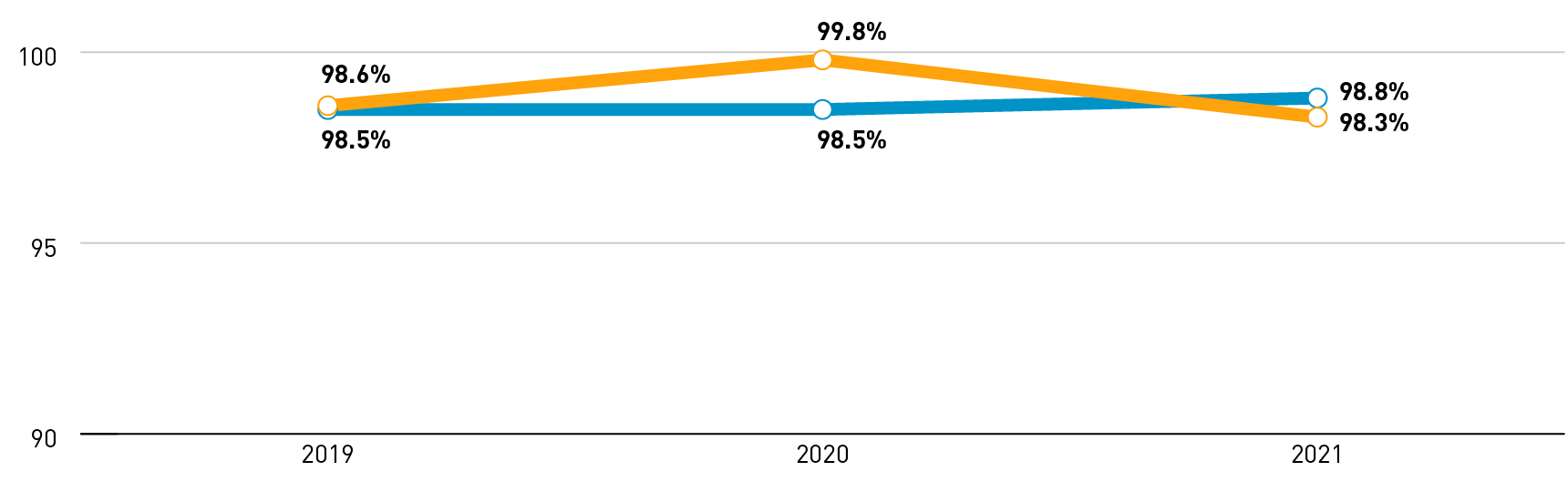
Our facilities were consistently available over 98% of the time when they were planned to operate.
Hydropower Reliability Footnote 1
- Target
- Actual
- 1. Measures the percentage of time facilities are available when they were planned to operate.1
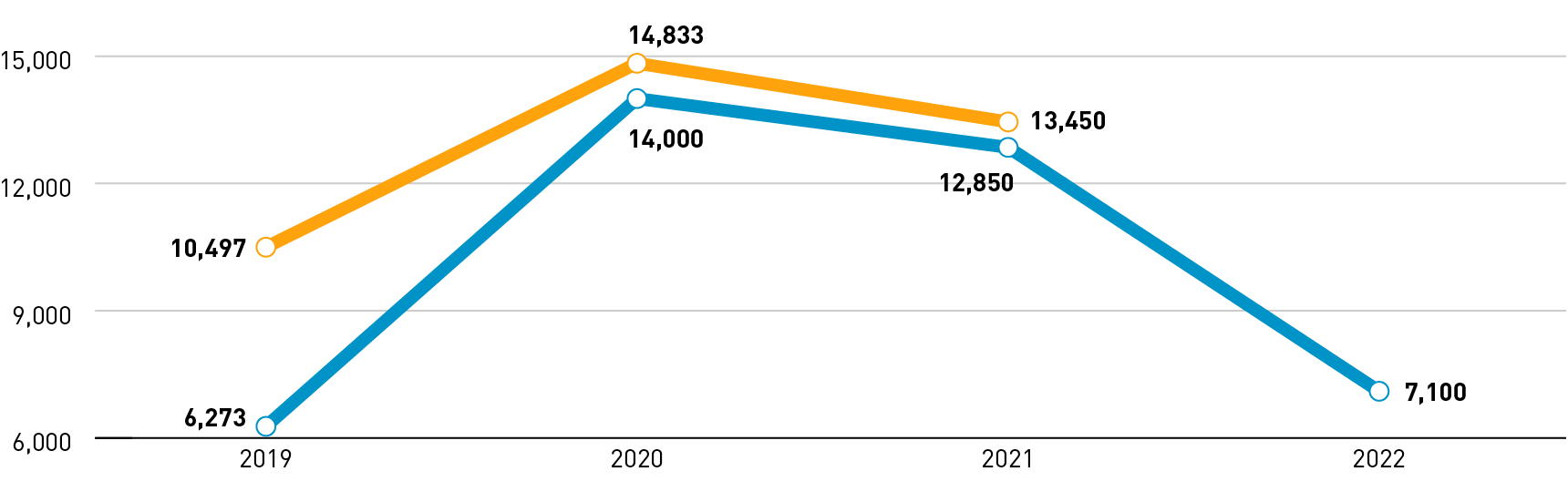
As part of PG&E’s wide-ranging public safety program, which includes K-8 education and an extensive dam safety and inspection program, we also track the installation of fencing and gates to further protect the public around PG&E-managed waterways. In 2021, PG&E exceeded our goal for total area protected by fencing and gating, and we are on track for our 2022 goal of 7,100 feet.
Area Protected by Fencing and Gating
(Linear Feet per Year)
- Target
- Actual
PG&E also tracks key indicators of our performance related to maintaining and managing our hydroelectric system and the fish and wildlife habitats that it encompasses:
 Miles of stream monitored for environmental conditions Footnote 1 Miles of stream monitored for environmental conditions Footnote 1 |
453 |
|---|---|
 Acres of bird nesting territories monitored Footnote 2 Acres of bird nesting territories monitored Footnote 2 |
8,764 |
 Acres managed for noxious weed control Acres managed for noxious weed control |
9,238 |
 Acres monitored for use by special status species Footnote 3 Acres monitored for use by special status species Footnote 3 |
11,903 |
- 1. Refers to miles of stream monitored for conditions such as water quality and flow, sediment management, habitat quality, fish populations, and invasive species.1
- 2. Includes monitoring of bald eagle and other nesting territories at PG&E hydroelectric projects.2
- 3. Special status species include those that are listed under the federal or state Endangered Species Acts or are otherwise given a specific designation by California or a federal resource or land management agency. Monitoring studies are required under various hydroelectric licenses.3